Bringing Accessibility to the Forefront:
WIPA NYC’s First Experience with
Live Captioning and Translation
By Jess Chuang
WIPA New York Chapter
At WIPA NYC, we’re always looking for ways to make our events more meaningful and inclusive. This year, with support from the National WIPA Reserves Grant, we had the opportunity to explore a new layer of accessibility by incorporating live captioning and Spanish translation into one of our multicultural events.
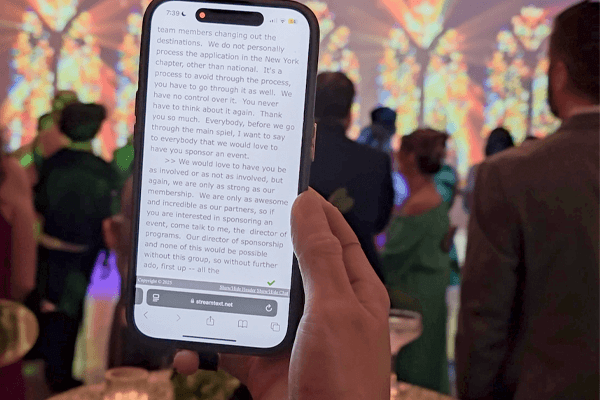
We partnered with Inclusive Communication Services to provide CART (Communication Access Real-Time Translation) and live language translation. Guests could access live captioning directly from their phones, which made it easier for those who are hard of hearing—or who simply prefer to read along—to stay engaged with the event in real time. Because the captions were accessible on personal devices, guests didn’t need to rely on being seated near a screen or projector. There were some features on there that could personalize your experiences as well such as changing the font, font size, high contrast, or customize whatever colors you want on your screen.
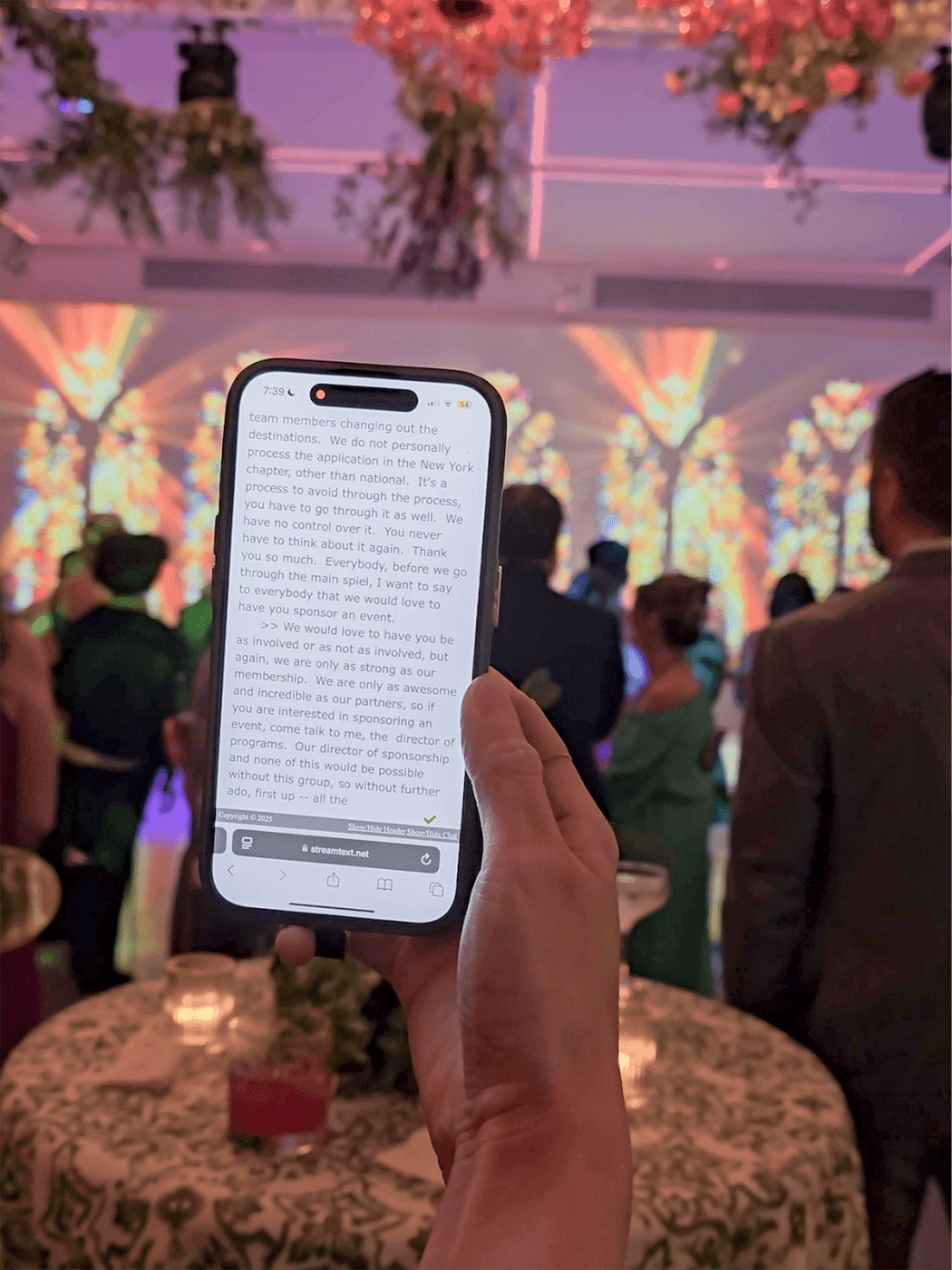
As someone who often finds it hard to hear during speeches with lots of background chatter, I found this tool especially helpful. Even when I missed something, I could scroll back and read what was said — a feature I haven’t seen in most captioning tools, which usually act like disappearing subtitles. That small detail made a big impact.
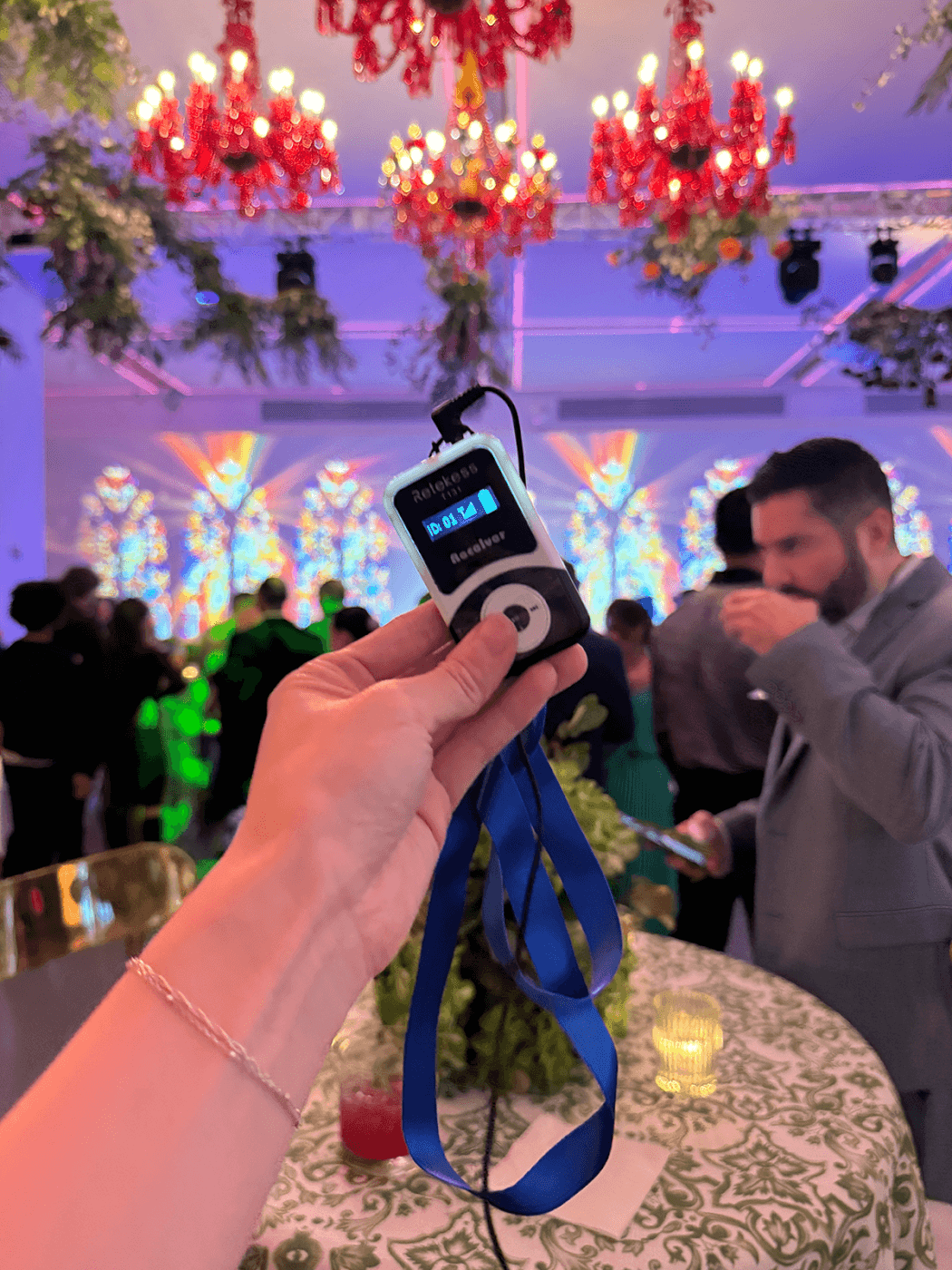
We also introduced live Spanish translation through headsets, provided by two fantastic interpreters. Juan Hernandez from Delivering Experiences tried it out and shared, “This is a really awesome feature… it’s not like a Google translation, it’s a live person translating it.” Having someone fluent in the language, able to interpret tone and context, made all the difference. While auto-translation still has a lot of work, this person is trained in both languages so they can find the best way to translate this. After hearing that feedback, it dawned on me how important features like this are. As a first generation born in America, my mom and dad don’t speak English really well. When they go to events like this and there are speeches, they don’t grasp what is being said fully. With tools like this, they can feel more included in the conversation/experience.
While the feedback was overwhelmingly positive, this being our first time came with a few learning curves. Because the event had a lot of ambient noise, it was sometimes challenging for the translators to clearly hear and interpret the speakers. That said, we see a lot of potential in using these tools for future events—especially educational ones where the environment is more structured and communication is the focus.
While live captioning and translation may not be needed at every event, this was an incredibly valuable test run. Now that our chapter is familiar with the tools, we’re better equipped to bring them back when they’re most impactful.
At the end of the day, inclusion isn’t just about who shows up — it’s about who feels seen, supported, and able to fully participate. We’re proud to have taken this first step and excited to keep learning and growing from here.
###